Stroke Survivor Names Her Baby After the Intensive Care Unit Nurse Who was Part of the Medical Team Who Saved Her Life
- Category: Blog, Heart And Vascular
- Posted On:
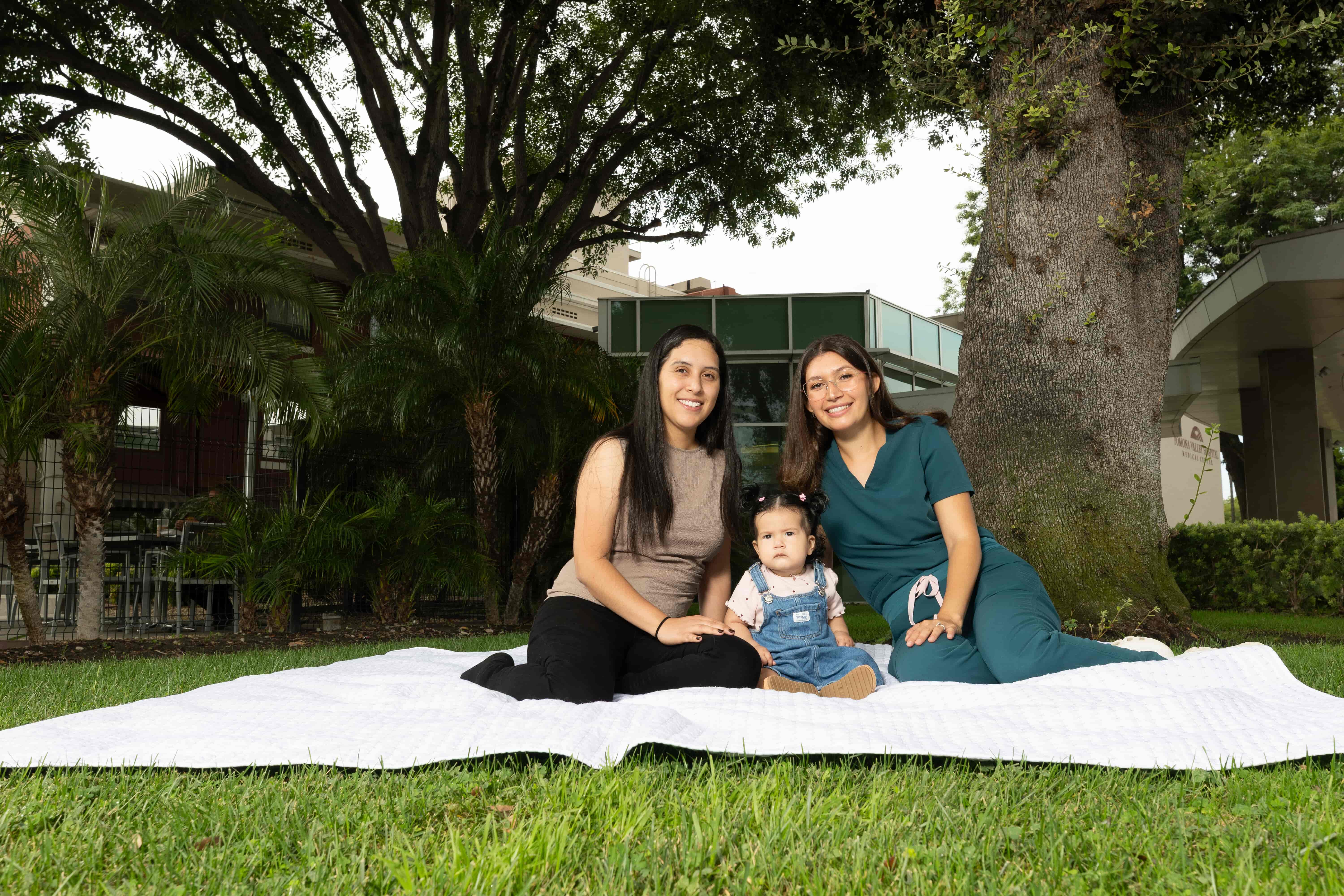
Almost a year has passed since licensed clinical social worker Vannessa Martin, 31, of Claremont, started experiencing headaches and nausea so painful and debilitating that she had to be rushed to the emergency room at a local hospital. At the time, Vannessa was 14 weeks pregnant with her first child and was told that her headaches were the result of a severe case of the flu.
Three days after Vannessa was discharged from the hospital, she was working with a patient when she suddenly felt dizzy and her vision went blurry. She woke up on the floor at work with her co-workers trying to speak to her. In her haze, Vannessa realized she was in trouble, she started telling her colleagues about her medical allergies. She lost consciousness and when she woke up the next day, she found herself in the Pomona Valley Hospital Medical Center (PVHMC) Neuro Intensive Care Unit (ICU). Vannessa learned that she had experienced a stroke, caused by a brain aneurysm.
A blood vessel in her brain had burst and by the time she had regained consciousness in the Neuro ICU, she had already received the lifesaving surgery that helped her survive. Doctors performed an External Ventricular Drain (EVD), a procedure that requires the insertion of a tube into the brain to drain excess cerebrospinal fluid. This temporary measure is commonly done after brain surgery to reduce pressure in the brain and to remove blood or other debris.
The condition came as a shock to Vannessa, who had no family history of stroke. Her only risk factor for aneurysm was pregnancy. A hemorrhagic stroke may occur due to an irregular formation of blood vessels. This is called an arteriovenous malformation (AVM). These irregular blood vessels can rupture and spill blood into the brain, causing a stroke.
According to the National Institute of Health, pregnancy may increase the risk of brain aneurysms due to hormonal and cardiovascular factors that occur when pregnant, although the risk is rare. The frequency of ruptured aneurysms in pregnancy ranges up to 11 incidents per 100,000 pregnancies.
“I was really scared about my condition and how it would impact my baby, and my ICU nurses, Mary Tan and Anyssa Henrich, were concerned about my wellbeing and paid special attention to me; they made me feel comfortable, informed, and safe,” says Vannessa.
Each time a physician visited Vannessa to describe a procedure, Anyssa came in to check on her.
“I could tell the ICU nurses truly loved their jobs and cared about their patients,” says Vannessa. “I was grateful for their help, but physically, I wasn’t doing well, and it was hard for me to rest while still experiencing the headaches.”
The two nurses picked up on Vannessa’s routine—they kept her supplied with ice packs for her headaches, they knew how she liked her pillows, and knew when she needed help brushing her teeth. The ICU also nurses would regularly come and check on her baby’s heartbeat.
“Anyssa called me and my baby, her miracle patients-– it made me feel so much better,” says Vannessa. “I was conscious in the ICU, and Anyssa told me that this was rare for patients in this unit. It put into perspective that I was already doing better and it really lifted my spirits.”
After three weeks in the Neuro ICU, Vannessa was stable and ready to go home. Upon her discharge, Vannessa nominated Nurse Anyssa for a Daisy Award, a recognition program to celebrate and recognize nurses. The nominations are made by patients, families, and co-workers. It is run by in partnership with the DAISY Foundation to thank nurses for the care and kindness they provide.
When Vannessa returned home, her obstetrician put her on leave from work to keep her blood pressure under control. Vannessa started attending the monthly stroke survivor support group at PVHMC. When visiting the medical campus, Vannessa took every opportunity to visit Nurse Anyssa.
Vannessa’s baby girl arrived earlier this year with no complications, and she turned six months old in July.
One year after her harrowing medical emergency, Vannessa has made a great recovery and she is enjoying her new role as a mother.
Vannessa has stayed connected with Nurse Anyssa and when her baby was born, she was excited to tell her that she had named her daughter in her honor.
“Anyssa was there for me during one of the worst times of my life and she’s made a significant impact on me,” said Vannessa. “Naming my daughter after her felt like the best way to remember her.”
In May, during National Stroke Awareness Month, Vannessa bravely shared her story with the stroke survivor support group.
“What I went through was overwhelming and talking about what happened to me made me feel too emotional,” said Vannessa. “Over time, I realized that it’s important to share my story and let others know about the seriousness of reoccurring headaches during pregnancy, and brain aneurysm risks.”
Also, during National Nurses Month in May, Anyssa was recognized with the Daisy Award during a celebratory breakfast at the medical center. Vannessa’s heartfelt letter highlighting Anyssa’s compassionate care in the Neuro ICU reflect the values and high standards of nursing that earned her this prestigious recognition.
In the last few months, Vannessa has started to work again and feels hopeful about her future. While she still worries about headaches, she will have annual brain scans and angiograms to monitor her aneurysm risk.
“Once my daughter goes to school, I hope to someday work at Pomona Valley Hospital Medical Center,” says Vannessa. “I’m grateful for the team who saved my life, and I hope that someday I can make an impact on others’ lives, like they have on mine.”
To read more about Vannessa and Anyssa's story and to read more stories and testimonials like this one, check out the latest issue of our Healthcares magazine here.
.jpg)