When a Mother’s Heart Stopped, Her Family Started CPR and Saved Her Life
- Category: Blog
- Posted On:

Shannon Hutchens was restless and awake much of the early morning on July 14, complaining that her back and chest hurt. Diagnosed with ulcerative colitis and fibromyalgia, she attributed her symptoms to those conditions.
Then, around 5:30 a.m., Hutchens, age 55, vomited, her knees buckled, and she fell face down on the bathroom tile, to the horror of Mike, her husband of 36 years. She wasn’t breathing, and he immediately called 911.
CPR Makes Brain- and Life-Saving Difference
Shannon was in cardiac arrest, when the heart suddenly and unexpectedly stops pumping and blood stops flowing to the brain and other vital organs. The American Red Cross says that for the past 20 years, the survival rate for cardiac arrest has hovered around 10% for out-of-hospital incidences and 21 % for in-hospital events. Research shows that high-quality CPR (cardiopulmonary resuscitation) can significantly impact survival outcomes, whether inside or outside the hospital.[1]
With one arm in a sling due to recent bicep reconstruction surgery, Mike felt he couldn’t turn Shannon over, as the 911 dispatcher was telling him to do.
“I typically thrive under pressure, but this—this was a totally different thing,” he says.
Understanding the gravity of what was happening, Mike found the strength to turn her over and began performing CPR with his free arm. He called out to his son, Trevor, to wait on the street to guide in the first responders.
Jade, their daughter, beelined to her mom, took over CPR and proclaimed, “Dad, I’ve got this, let me do it!”
“She knocked it out of the park,” her proud dad says. “Our son, Trevor, waited patiently outside to guide the EMTs to Shannon.”
Having learned CPR 18 years ago, Jade worked furiously for seven minutes until paramedics arrived. CPR protocol involves 30 chest compressions, then taking a break to deliver two mouth-to-mouth rescue breaths.
TTM Protocol Spares Organs More Damage
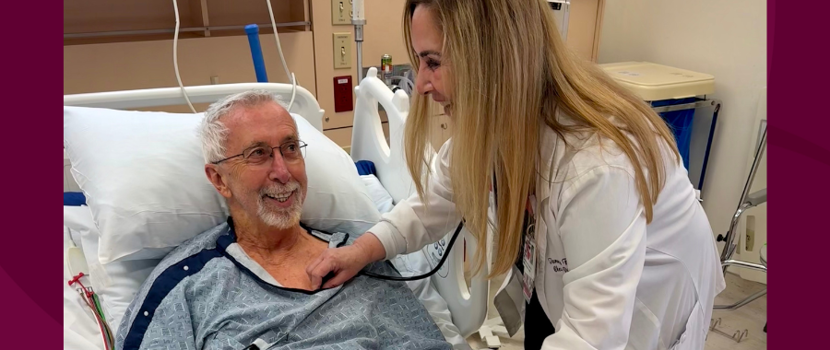
The emergency team worked on Shannon for 25 minutes before she was stabilized enough to be moved, ultimately spending 19 days in the cardiovascular intensive care unit (CVICU) at Pomona Valley Hospital Medical Center.
Her cardiologist, Guarav Parikh, MD, says an intra-aortic balloon pump helped her heart pump more effectively while on life support. The team implemented therapeutic hypothermia, or targeted temperature management (TTM), to lower her body temperature to approximately 91 degrees Fahrenheit and protect her brain and other organs from a lack of blood supply.
“Often, the brain may be stunned, and this protocol increases chances of better neurological outcomes,” Dr. Parikh says.
She underwent a quadruple coronary bypass on July 25, due to a severe blockage in her heart visible on an angiogram.
After recovery in the CVICU, she spent two days in the cardiac telemetry unit. Consistent monitoring of the heart’s electrical activity provides doctors with critical data and alerts them to abnormal heart rhythms as they continue to heal.
The family applauds the wonderful nurses who attended to every meticulous detail. “They’re amazing human beings,” Mike says.
“Here, we have a dedicated team ready to respond to cardiac arrest 24/7,” says Dr. Parikh. “Our Emergency Departments collaborates closely with the specialized team at the Stead Heart and Vascular Center.”
Post-Cardiac Arrest Brings Relearning
“Shannon is a fighter,” Mike says. “She experienced some PTSD (post-traumatic stress disorder) and had some delirium in the ICU.” Delirium is characterized by alteration of attention, consciousness and cognition.
At home, Shannon says she’s getting “bored” now. After her first week home with a walker, she’s now walking up to 15,000 steps a day and is back to cooking amazing, cardiac-friendly foods. “I feel great!”
She continues to work on her cognitive issues that resulted from her cardiac arrest. She tends to “mirror” things, reversing how they should look or function, and she’s relearning the alphabet.
“It’s like a slow computer rebooting,” Mike says, optimistically. “Every day, we see so much progress.”
The Hutchens family and Dr. Parikh want everyone to learn “bystander” CPR, which is easy to remember and saves so many lives. The family even hosted a class for friends and neighbors, taught by a certified professional.
Mike remembers the day Shannon returned for a visit with Dr. Parikh. “He sat down, looked closely at her, and said, ‘I can’t believe you’re sitting there. You’re going to be just fine.’”